Millennial Guide to Asking Parents for Home Loan Help
You've run the numbers ten times. Even with two incomes, a clean credit score, and a starter-home budget, the down payment is still the wall you cannot climb. Across the country, millennials between 30 and 44 are quietly having the same realization: the only way into a first home is a conversation with their parents that nobody taught them how to have.
This is a guide to that conversation. Not the pep talk, not the statistics, but the actual mechanics — what to ask for, how to ask, how to structure it so your parents' retirement is protected, and how to walk out of the holiday dinner with a yes (or a graceful no) instead of months of awkwardness.
Quick answer: Ask your parents for a structured family loan, not a vague handout. Bring a specific dollar amount, a proposed interest rate at or above the IRS Applicable Federal Rate (currently 3.81%–4.63% in mid-2026), a repayment timeline, and a written promissory note. Treating it like a business arrangement is what makes it survive as a family arrangement.
Why Millennials Are Turning to Parents in 2026
The math is unforgiving. A starter home in most US metros now runs $350,000 to $550,000. A conventional mortgage wants 20% down to dodge private mortgage insurance — that's $70,000 to $110,000 in cash, on top of closing costs, moving costs, and the emergency fund any prudent first-time buyer needs. The median millennial household has nowhere near that saved.
This is not a generational personality flaw. Housing prices have outpaced wages by roughly two-to-one over the last two decades, and the years when millennials should have been compounding savings into a down payment were the same years they were paying off student loans, working through unpaid internships, or absorbing the cost of two recessions.
So millennials are doing what every generation does when the conventional path closes: they're using the resources their family has. The difference is that this generation is more likely to formalize the help as a loan rather than a gift — partly because they want to preserve their own dignity, and partly because their parents, who have their own retirement to fund, can no longer simply give the money away.
If you're feeling guilty about needing the help, set that down. Use the help, structure it well, and pay it back. That's the only outcome that respects everyone in the room.
What the Numbers Actually Show
Recent surveys paint a clear picture of the family-down-payment economy:
- Roughly one in three millennial and Gen Z homebuyers plan to use family money for at least part of their down payment.
- 56% of millennial homebuyers received some form of financial help on their current home — gifts, loans, or both.
- Most contributing parents give between $25,000 and $49,999, with about a quarter giving $50,000 or more.
- Among recipients, roughly 48% received a gift, 28% received a loan, and 25% received a hybrid — part gift, part loan.
The takeaway: you're not asking for something exotic or shameful. You're participating in what has quietly become the most common way millennials enter the housing market. The question isn't whether to ask. The question is how to ask in a way that protects the relationship and gets you into a house you can actually afford to keep.
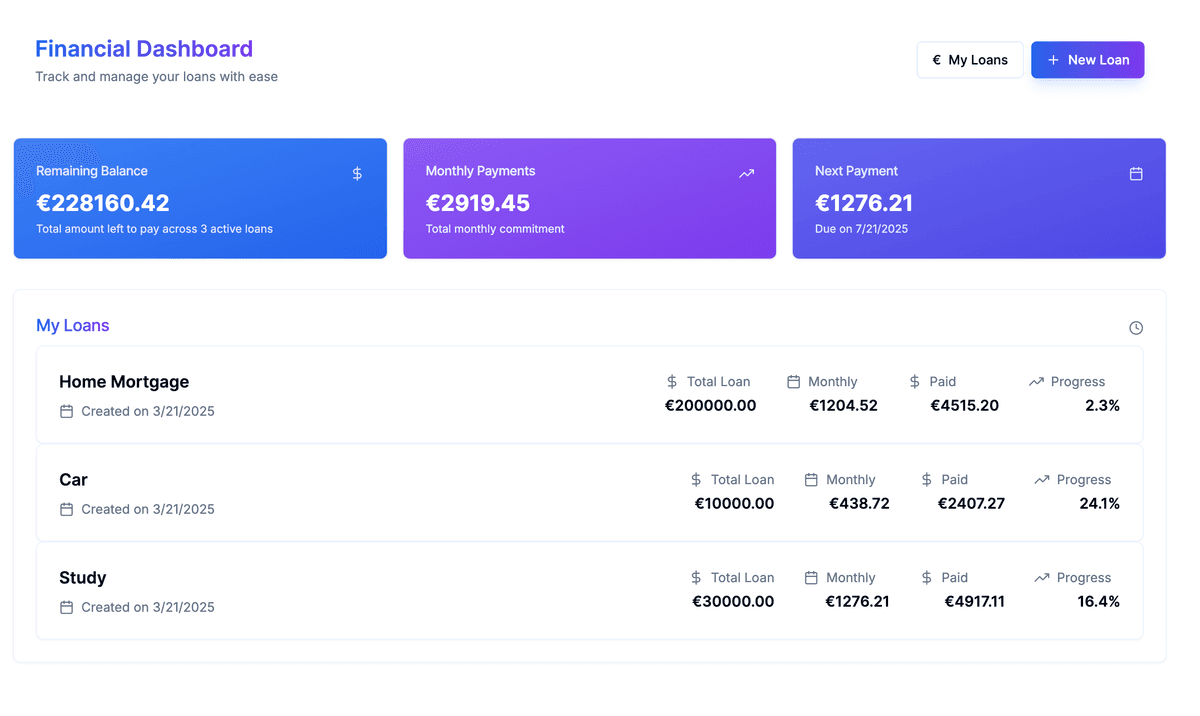
Generate your loan agreement →
Before You Ask: A Self-Audit
Before you sit your parents down, sit yourself down. The fastest way to make this conversation go badly is to ask for help you don't actually need, or to ask before you've done the work that would make a yes possible.
Run through these questions honestly:
Is this the right house? Are you looking at a starter home you can comfortably afford with the help, or are you trying to leverage family money into a place that will still be a stretch? Parents who sense the latter will say no, often for reasons they won't articulate.
Can you afford the monthly payment? Down payment help only solves the first day of homeownership. If the mortgage, taxes, insurance, and maintenance will eat 40%+ of your take-home pay, you're not ready. Reset the budget before you ask.
What's your emergency fund? Most lenders want to see two to six months of reserves. Beyond what they want — you want it too. Buying a house with zero cushion and a family loan to repay is a recipe for a difficult phone call eighteen months from now.
Have you talked to your partner? If you have one. Both names need to be aligned on the ask, the amount, and the repayment plan before either set of parents enters the conversation. Mixed signals between partners are the single biggest reason these conversations fall apart.
What's the rest of your debt picture? Credit cards, student loans, car loans — your parents will (rightly) wonder whether handing you $50,000 just delays a different financial reckoning. Have a clear answer.
This kind of self-honesty is hard, and we cover the emotional side of family money in more depth in our guide to the psychology of family loans and how to manage expectations. Read it before the conversation, not after.
How to Frame the Ask Without Sounding Entitled
There is a tone problem unique to this generation. Millennials grew up being told they could ask for anything and watching the internet treat that as cringe. The result is that many millennials ask for family help apologetically, vaguely, or sideways — none of which works.
Three principles to fix the framing:
Specific beats vague. "Could you help with the down payment?" puts the entire decision on your parents — they have to figure out how much, on what terms, and what it means. "I'm asking to borrow $40,000 toward a down payment, repaid monthly over 10 years at 4% interest" gives them something to react to. Far easier to say yes to a specific proposal than to an open-ended request.
Plan beats hope. Walk in with a one-page summary: the property, the total cost, your down payment from savings, the gap, the proposed loan structure, and your monthly repayment capacity. Even if your parents wave the paper aside, the fact that you brought it changes how they hear the rest of the conversation.
Equity beats charity. Frame this as a deal that benefits them too. They'll earn interest above what their savings account pays. The repayment schedule is predictable. You'll generate documented payment history, which builds your financial track record. None of this is fiction — these are real upsides for the lender.
If you've never made an ask like this before, our walkthrough on how to ask family for a loan has a longer breakdown of the exact sequence, from picking the right moment to handling pushback in real time.
Scripts for Different Family Dynamics
No two families are alike. Below are starting points for four common dynamics. Adapt the language; keep the structure.
Script 1: The Direct Parents
For families that value efficiency and dislike emotional preambles.
"Mom, Dad — Sam and I are ready to buy a house. We've found a place at $410,000 and we have $42,000 saved, which gets us partway but not to 20% down. I want to ask you about borrowing $40,000 from you, with a 10-year repayment plan at 4% interest. That's a payment of about $405 a month, which I've already worked into our budget. Can we talk through whether that's something you'd consider?"
Script 2: The Cautious Parents
For families that want to hear the safety net before they hear the ask.
"Before I get to what I'm asking, I want to walk you through where we are financially: our income, our savings, our debts, and the budget for the new house. The reason I want to start there is because you've taught me to think this way, and I want you to see that I have. Once you've seen the numbers, I have a specific proposal I'd like to share with you."
Script 3: The Emotional Parents
For families that treat money as a love language and need the relational frame.
"I want to ask you something important, and I want to ask in a way that protects our relationship, because that matters more than any house. I'd like to borrow some money for a down payment — not as a gift, as a real loan with a real repayment plan. I want it set up so that if anything ever feels off between us, we can look at the agreement instead of fighting about feelings."
Script 4: The Sibling-Sensitive Parents
For families with multiple kids where fairness is a live issue.
"I want to raise something I've been thinking about. Before I ask for help, I want to acknowledge that Alex and Jordan might need help too at some point. I don't want this to create unfairness. Could we talk about it as a family plan — what's available, what each of us might draw on, and how to keep it equitable over time?"
Notice what these scripts have in common: a specific number, a specific structure, and an explicit acknowledgment of whatever your parents are most likely to worry about. That's the architecture.
Gift vs. Loan: The Decision Your Parents Will Make
Once they're willing to help, your parents will make a quiet decision: is this a gift, a loan, or a hybrid? Each option has different consequences for taxes, mortgage qualification, and the relationship. Knowing the trade-offs makes you a useful partner in the decision instead of a passive recipient.
| Structure | What it means | Tax implications | Mortgage impact | Relationship effect |
|---|---|---|---|---|
| Pure gift | Money is transferred with no expectation of repayment | Parents may need to file a gift tax return if the amount exceeds the annual exclusion (~$19,000 per recipient in 2026); usually no actual tax owed unless lifetime exemption is reached | Lender requires a gift letter; gift doesn't increase your debt-to-income ratio | Cleanest financially; can create emotional weight or unspoken expectations |
| Pure loan | Documented loan with interest at or above the AFR, scheduled repayment | Parents report interest income; you may deduct interest if loan is secured by the home | Loan payment is included in your debt-to-income ratio; lender will want to see the promissory note | Most professional; payment schedule keeps both sides accountable |
| Hybrid | Part of the money is gifted (often up to the annual exclusion), rest is a loan | Combination of both rules; cleaner if structured deliberately | Mortgage lender sees both — gift letter for one portion, promissory note for the other | Flexible; lets parents help meaningfully without taking on full-loan paperwork |
A common, sensible structure: parents gift each child (and each child's spouse) up to the annual gift tax exclusion outright, then loan the remainder. That uses the gift exclusion efficiently, keeps the loan portion modest, and gives the mortgage lender a clean picture.
For a deeper look at the gift-vs-loan question and how mortgage lenders handle each, see our complete guide to family down payment loans. For the tax mechanics in particular, the IRS Applicable Federal Rates page is the authoritative source your parents' CPA will check.
What Mortgage Lenders Need to See
This is the part most millennial buyers miss until it bites them at the underwriting stage. Mortgage lenders care a lot about where your down payment came from, and they will ask.
If it's a gift, expect to provide:
- A signed gift letter from the donor stating the amount, the relationship, the property address, and that no repayment is expected
- Proof of the donor's ability to give the gift (a recent bank statement)
- Documentation of the transfer (wire confirmation, deposit slip)
If it's a loan, expect to provide:
- The full promissory note
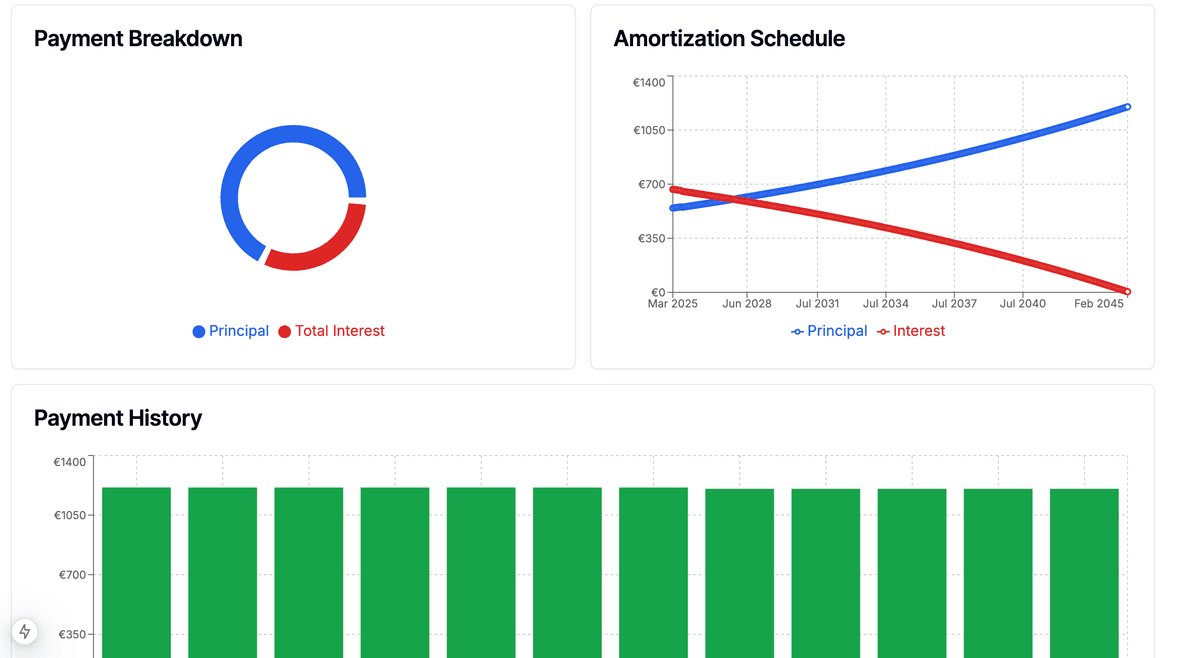
- An amortization schedule
- Proof that payments have already begun, or are scheduled to begin
- The monthly payment will be included in your debt-to-income ratio, which may reduce the size of mortgage you qualify for
That last point matters enormously. A $40,000 family loan at 4% over 10 years adds about $405 to your monthly obligations — which can shave $70,000 to $90,000 off the mortgage you qualify for, depending on your other debts. Run the combined math before you settle on a structure.
For the broader comparison between a family-funded down payment and a fully bank-financed purchase, our piece on bank loans versus family loans walks through the numbers in both directions.
Setting Up the Arrangement Like Adults
Once your parents agree, resist the urge to leave the paperwork "for later." Later is how informal family loans become silent resentments. Set it up properly now, while everyone is still in goodwill mode.
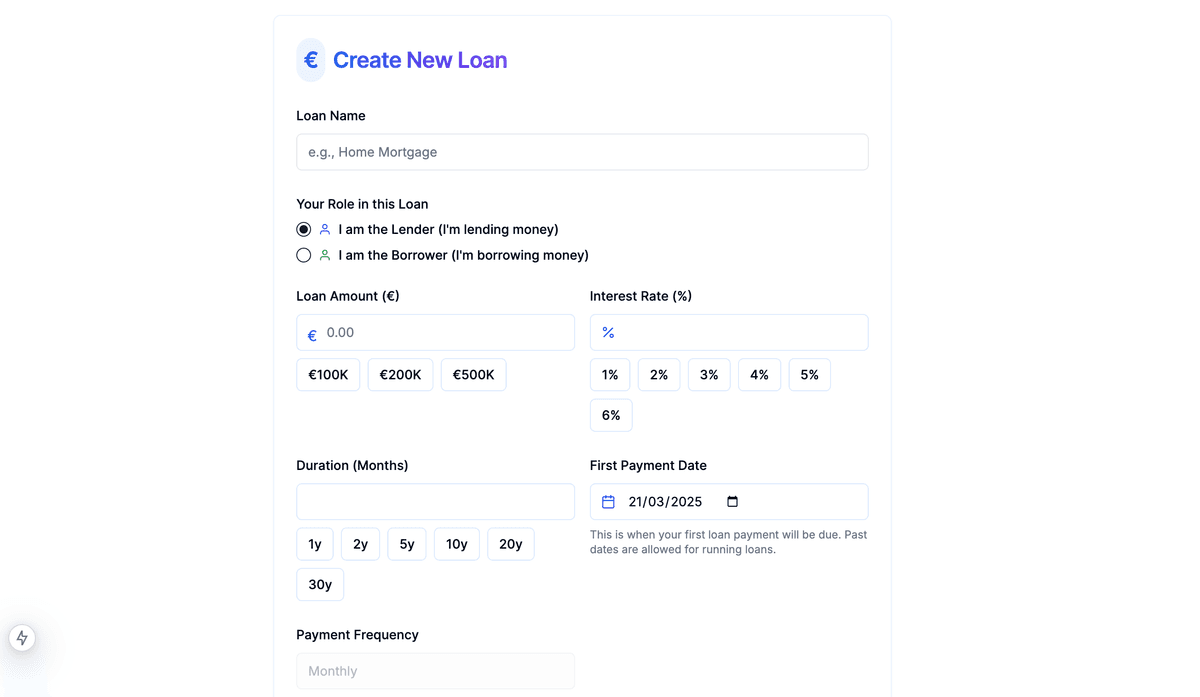
Step 1: Draft a promissory note. This is the document that turns a verbal yes into an enforceable agreement. It should include:
- Names and addresses of lender and borrower
- Principal amount
- Interest rate (at or above the current AFR — see the IRS AFR page)
- Payment amount, frequency, and start date
- Maturity date
- Late-payment and default provisions
- Whether the loan is secured (typically by a second lien on the property for larger amounts)
- Prepayment terms
Step 2: Generate an amortization schedule. This shows every payment, the split between principal and interest, and the running balance. Both parties should have a copy. A tool like Family Loan Tracker generates this automatically and makes it easy to keep both sides synced.
Step 3: Notarize the note. Notarization isn't legally required in most states, but it adds weight and creates a clear paper trail — which matters if anything ever ends up in front of a judge or a tax auditor.
Step 4: Record the lien (if applicable). For larger loans secured by the property, file the deed of trust or mortgage with your county recorder's office. This protects your parents' interest if the home is later sold or refinanced.
Step 5: Set up the payment system. Automatic monthly transfer on the same day every month. Memo line: "Loan payment — [your name]." Both sides see it land. There is no faster way to make a family loan feel professional than turning it into a calendar event that requires zero conversation.
If drafting a promissory note from scratch feels intimidating, create a free loan agreement using a generator that handles the standard clauses for you. A polished agreement that both parties have reviewed and signed is what makes the difference between a deal and a vibe.
When Your Parents Say No (Or Maybe Later)
Some parents will say no. Some will say not yet. Some will say "let me think about it" and never come back to it. Each of these is a real outcome and you should be prepared for it.
If they say no flat-out: Thank them, don't argue, and don't pivot to guilt. They have their own retirement to fund, their own life expectancy to plan around, and their own reasons that may have nothing to do with you. Ask if there's a smaller form of help that would feel comfortable — a co-signed lease while you save longer, help with closing costs only, a smaller gift toward the down payment. Often a partial yes is available where a full yes isn't.
If they say not yet: Get specific. "What would need to change for this to be a yes a year from now?" Concrete answers ("when your sister finishes school" or "when our portfolio recovers") let you plan around them. Vague answers usually mean a softer version of no.
If they hedge: Don't push. Leave the door open and check back in three to six months. Some parents need time to talk to a financial advisor, a CPA, or each other before they can answer.
A parent's no is sometimes the best gift they give you — it forces you to keep saving, to lower your budget, or to look at FHA, VA, or low-down-payment conventional loans you would otherwise have skipped. If your parents have read our companion piece on how to say no to a family loan request, they may handle the conversation more gracefully than you expect.
After the Money Lands: Protecting the Relationship
The hardest part of a family home loan isn't the ask. It's year three.
By year three, you've stopped feeling guilty about the loan and started feeling normal. Your parents have stopped feeling generous and started feeling like a creditor. The monthly payment has become invisible — until you miss one, or your parents need money and feel awkward asking for an early principal payment, or your sibling makes a comment over Thanksgiving dinner.
A few habits that prevent the year-three drift:
Make every payment, on time, every month. No exceptions, no "I'll catch up next month." Set the autopay and forget about it. The day you miss a payment is the day the loan stops feeling like a business deal and starts feeling like a favor — and favors create power imbalances that corrode family relationships.
Send an annual statement. Once a year — January is natural — send your parents a one-page summary: total paid this year, principal paid, interest paid, remaining balance, expected payoff date. Two minutes of work. Demonstrates respect. Heads off the "I have no idea where we are with this loan" conversation that nobody enjoys.
Don't disappear. Many borrowers, embarrassed about owing money, pull back from the relationship. This is the worst possible move. Stay connected the same way you would if no loan existed. The loan is a piece of paper; the relationship is everything else.
Celebrate the payoff. When the final payment lands, do something to mark it. A dinner, a thank-you note, a photograph. It closes the chapter cleanly and ensures the last memory of the loan is a good one.
If you ever want to repay early, run the numbers first. Our walkthrough on how to recalculate your loan balance after extra payments shows exactly how a single windfall payment can shave years off the loan.
And if you ever fall behind — illness, job loss, divorce — call your parents before you miss the payment, not after. Most parents will work with you on a modified schedule if you bring the problem to them. None of them will react well to discovering it on a bank statement.
Generate your loan agreement →
A Closing Note for Millennials Doing This Right Now
If you are in the middle of this — somewhere between the spreadsheet and the conversation — here is the only mindset that consistently works:
You are not begging. You are not failing. You are running the same playbook millions of households are running this year because the housing market made it the rational move. Your job is to be the kind of borrower your parents are proud they lent to: prepared, specific, communicative, and reliable. Do that, and the loan strengthens the relationship instead of straining it.
The conversation is awkward for about fifteen minutes. The house is yours for thirty years.
FAQ
How much should I ask my parents for as a down payment loan?
Ask for the gap between your own savings and what gets you to a comfortable down payment — usually 10% to 20% of the purchase price. Most parents who help give between $25,000 and $50,000, though larger amounts are common in higher-cost markets. Bring a specific number based on a specific property and budget, not a vague range.
Is it better to ask for a gift or a loan from my parents?
A gift is cleaner for mortgage qualification because it doesn't increase your debt-to-income ratio, but it has gift tax reporting implications for the parent if it exceeds the annual exclusion (~$19,000 per recipient in 2026). A loan is more flexible and feels more dignified for many borrowers, but it does count toward your DTI. A hybrid — gifting up to the annual exclusion and lending the rest — is often the best of both worlds.
Do I have to pay interest on a family home loan?
Yes, for any loan over $10,000 you should charge at least the IRS Applicable Federal Rate (AFR) to avoid imputed interest rules. The AFR for mid-term loans is currently 3.81% and for long-term loans 4.63% (mid-2026). Charging at least AFR keeps the IRS happy and reinforces the legitimacy of the loan.
Will my mortgage lender approve a loan from my parents?
Yes, but they'll want documentation: a signed promissory note, an amortization schedule, and proof of the loan terms. The monthly payment will be included in your debt-to-income ratio, which may reduce the size of mortgage you qualify for. Plan the combined obligation carefully before you commit.
How do I bring up a home loan with parents who hate talking about money?
Don't ambush them. Send a short text or email a few days ahead: 'I'd like to talk about something financial when you have time — nothing urgent.' That gives them time to absorb the topic before the conversation. When you do talk, lead with a written one-pager so the focus stays on numbers, not feelings.
What if my parents agree to help but want it to be a 'we'll figure it out later' arrangement?
Politely push for structure before the money moves. 'I'm so grateful — I'd like us to put it in writing so we both have a record of the terms.' Frame the documentation as protecting their interests, not yours. A loan with no written terms is the single highest-risk version of this arrangement; never let goodwill replace paperwork.
Can my parents legally require me to repay if I sign a promissory note?
Yes. A properly executed promissory note is a legally enforceable contract in all 50 states. That's a feature, not a bug — enforceability is what makes the IRS treat the transaction as a real loan rather than a disguised gift, and it's also what protects both sides if circumstances change.
What happens to the loan if my parents die before I pay it off?
It becomes an asset of their estate, and you continue paying to the estate (or to whoever inherits the note). Some parents include a forgiveness clause in their will so the remaining balance is forgiven at death. Discuss this explicitly during estate planning — don't let it be a surprise to anyone.
Should I tell my siblings I'm getting a family loan for a house?
Generally yes, and ideally your parents should be the ones to mention it. Hidden financial help between parents and one child is the single most common source of long-term sibling resentment. Transparency now — including a clear statement about whether comparable help would be available to siblings — heads off the explosion later.
What's the biggest mistake millennials make when asking parents for home help?
Asking before they're ready. Walking in with a vague request, no specific property, no budget, and no proposed terms makes parents feel they're being asked to do all the planning. The borrowers who get a yes are the ones who hand their parents a one-page summary and a specific number — and the borrowers who keep their relationships intact are the ones who treat the loan like a real obligation every month after.