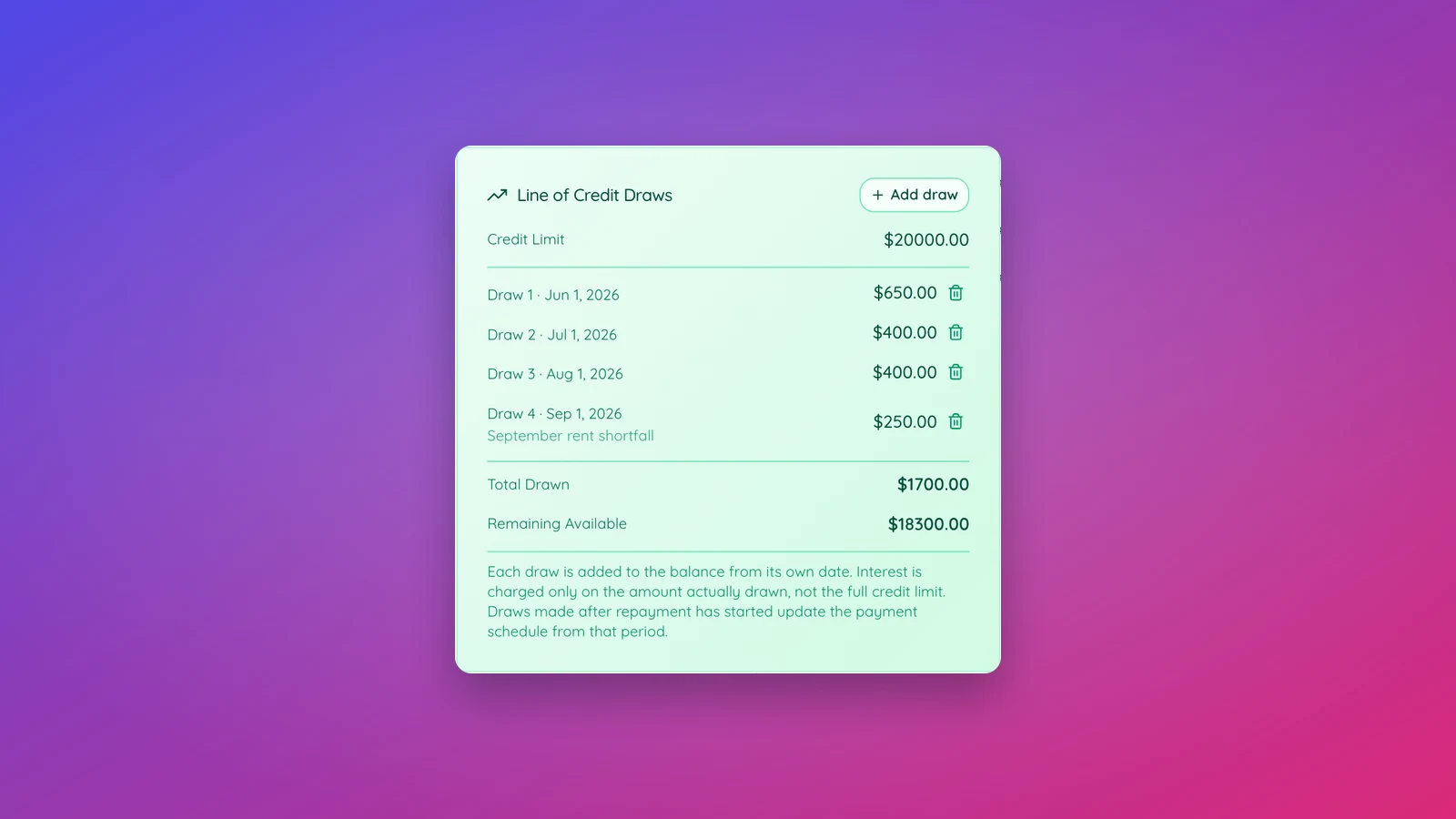
If you owe money to a credit card company and to your parents at the same time, the interest math says pay the card first. The relationship says pay your parents first. The order that holds up on both counts is a hybrid: the card gets paid down first, but the family payment never drops to zero. A small, fixed monthly amount goes to the family loan on time, and every spare dollar goes at the high-rate card. Once the card is gone, that whole payment rolls into the family loan.
In the example below, that hybrid costs about $180 more in interest than ignoring your family completely until the card is paid. It costs about $1,800 less than paying family first. That $180 is the cheapest relationship insurance you will ever buy.
Why both popular answers are half right
Search this question and you get two camps. Debt payoff guides say rank every debt by interest rate and attack the highest one, which almost always means credit cards. A smaller group of financial planners argue the opposite: family loans are real loans, they quietly damage relationships when they drift, so they should come first.
Both camps miss something.
- The interest-rate camp treats a 0% family loan as free money. It is not. A loan your parents are waiting on has a cost that never shows up on a statement: their own budget, their trust, and every holiday dinner where nobody mentions it.
- The family-first camp ignores how expensive credit card debt is right now. The Federal Reserve's G.19 consumer credit release put the average rate on credit card accounts that are assessed interest at 22.36% in the third quarter of 2026. Paying a 0% or 3% family loan ahead of a 22% balance means paying the card company hundreds or thousands of dollars more than you need to.
The fix is not choosing a side. It is giving each debt the job it is best at.
The 3-tier order when you owe family and credit cards
Think of your debt payments in three tiers. You fill each tier before money flows to the next one.
Tier 1: Keep the essentials and every minimum current
Housing, utilities, food, transportation to work, and insurance come before any debt. After that, every debt gets at least its minimum. That includes the credit card minimum, any car loan or mortgage, and a fixed floor payment on the family loan.
The floor is the part most people skip. It does not need to be big. On a $10,000 family loan, $100 a month is enough to show that the loan is alive, that you have not forgotten, and that repayment is a habit, not a someday promise.
Tier 2: Send every extra dollar to the highest-rate debt
Whatever is left after Tier 1 goes to the most expensive debt, which for most people is the credit card. This is the classic avalanche method, and it is where you save real money.
Tier 3: Roll the freed-up payment into the family loan
The month the card hits zero, its entire payment moves to the family loan on top of the floor. You are not finding new money. You are redirecting money you were already used to sending away.
The numbers: $8,000 on a card, $10,000 from your parents
Take a named scenario. Dana owes $8,000 on a credit card at 22% APR and $10,000 to her parents at 3%. She can put $700 a month toward debt, no more. We ran three repayment orders month by month.
| Repayment order | Card paid off | Everything paid off | Total interest | Paid to parents in year one |
|---|---|---|---|---|
| Card first, family gets $0 until the card is gone | Month 13 | Month 28 | $1,597 | $0 |
| Card first, family gets a $100 floor | Month 16 | Month 29 | $1,777 | $1,200 |
| Family first, card gets a $240 fixed payment | Month 31 | Month 31 | $3,595 | $5,520 |
Three things stand out.
The floor is cheap. Paying $100 a month to her parents while the card is still open adds three months to the card payoff and about $180 in total interest. In return, her parents receive $1,200 in the first year instead of nothing.
Family first is expensive. Putting the parents ahead of the card nearly doubles the total interest, to $3,595. Almost all of that extra money goes to the card issuer, not to her family.
The finish line barely moves. All three orders clear the debt within 28 to 31 months, because the monthly budget is the same. The order changes who gets paid when, and how much the bank keeps.
You can test your own balances with the loan payoff calculator, which shows how extra payments move a payoff date. If you have not borrowed from family yet and are weighing a loan to clear the card itself, that is a different decision, covered in family loan to pay off credit card debt.
When paying family first is the right call
The hybrid is a starting point, not a rule. The case for sending more to family sooner gets much stronger when one of these is true:
- Your lender needs the money. If your parents lent you part of their emergency fund or are living on a fixed income, their need outranks your interest savings. A $180 saving for you is not worth a missed bill for them.
- You agreed to a schedule. If you signed a loan agreement with a monthly payment, that payment is a minimum, just like the card's. It belongs in Tier 1 at the full agreed amount, not a reduced floor.
- The card rate is low. A 0% balance transfer with a year left on the promo changes the math. Pay the family loan while the card costs nothing, and clear the card before the promotional rate ends.
- The relationship is already strained. If payments have lapsed for a year and nobody is talking about it, rebuilding trust can be worth more than any interest figure. Our piece on the psychology of family loans explains why silence does so much damage.
And when should a bank or a professional take over? If you cannot cover Tier 1 at all, the order of payments is not your real problem. The CFPB explains that a credit counselor, usually from a nonprofit organization, can advise you on your money and debts and help you build a budget. That conversation is worth having before you skip anyone.
Does paying family first hurt your credit score?
It can, indirectly. According to myFICO, payment history makes up 35% of a FICO Score and amounts owed make up 30%. A private loan from your parents usually does not appear on your credit report at all, so paying it early does nothing for your score. A carried card balance, on the other hand, keeps your utilization high, and a missed card minimum lands on your report.
That is one more reason the card gets the extra dollars. If you want the full picture of how family loans and credit interact, read does a family loan affect your credit score.
How to tell your family about the plan
The order only works if your lender knows about it. A $100 payment that arrives without explanation can look like you are not trying. The same $100, explained, looks like a plan.
Keep the conversation short and specific:
"I want to be upfront about how I'm paying things back. My credit card is costing me 22%, so I'm putting every extra dollar there first. Meanwhile you'll get $100 on the 1st of every month, no matter what. The card should be gone by next spring, and then your payment jumps to $700."
Then put it in writing. If the original deal had no written terms, now is a good time to fix that with a free loan agreement that shows the floor payment and the date it steps up. If you already have a schedule and are changing it, agree on the new terms together first. Our guide to pausing a family loan during a hardship covers how to document a temporary change so nobody remembers it differently later.
Make the floor payment visible
A floor payment only builds trust if your family can see it land. Three habits help:
- Automate it. Set a recurring transfer for the day after payday, so the family payment never competes with your mood that month.
- Record every payment in one shared place. When both of you see the same balance, there is nothing to argue about. In Family Loan Tracker, recording a payment updates the balance for lender and borrower at the same time.
- Recalculate when the payment steps up. When the card is paid off and the family payment jumps, the payoff date moves a lot. Seeing how extra payments shorten the loan is a real motivator for both sides.
If you want both of you looking at the same numbers from the first payment, you can start tracking your loan for free.
The bottom line
The numbers favor paying the expensive debt first. The relationship favors never making your family wait in silence. A small, fixed, on-time payment costs you a little interest and buys you something no card issuer offers: a lender who still trusts you when the card is gone and their turn finally comes.
This is general information, not financial advice. Your own budget, rates and family situation decide which order fits you.