The annual gift tax exclusion is the amount one person can give another in a calendar year without filing a gift tax return or using any lifetime exemption. For 2026, that amount is $19,000 per recipient — the same as 2025, after the IRS held the figure steady following its 2025 inflation adjustment.
For family lenders, the exclusion matters beyond ordinary gift-giving. It affects how much interest you can forgive or gift back on a family loan each year, and it intersects directly with imputed interest rules on below-market loans.
Quick answer: In 2026, you can give any one person up to $19,000 without filing Form 709 or touching your lifetime exemption. A married couple can combine exclusions to give $38,000 to one recipient by electing gift-splitting. Exceed the limit to a single person in a year, and you must file Form 709 — though you likely still won't owe gift tax, since the separate lifetime exemption is currently $15,000,000 per person for 2026.
How the exclusion applies to family loans
The exclusion isn't loan-specific — it's a general gift tax rule. But it shows up in family lending in a few recurring ways.
Loan forgiveness. If you forgive $10,000 of principal on a loan to your adult child this year, that forgiven amount counts as a gift to them in the year you forgive it. Stay under $19,000 in total gifts to that person for the year (forgiveness plus anything else you gave them) and no Form 709 is required.
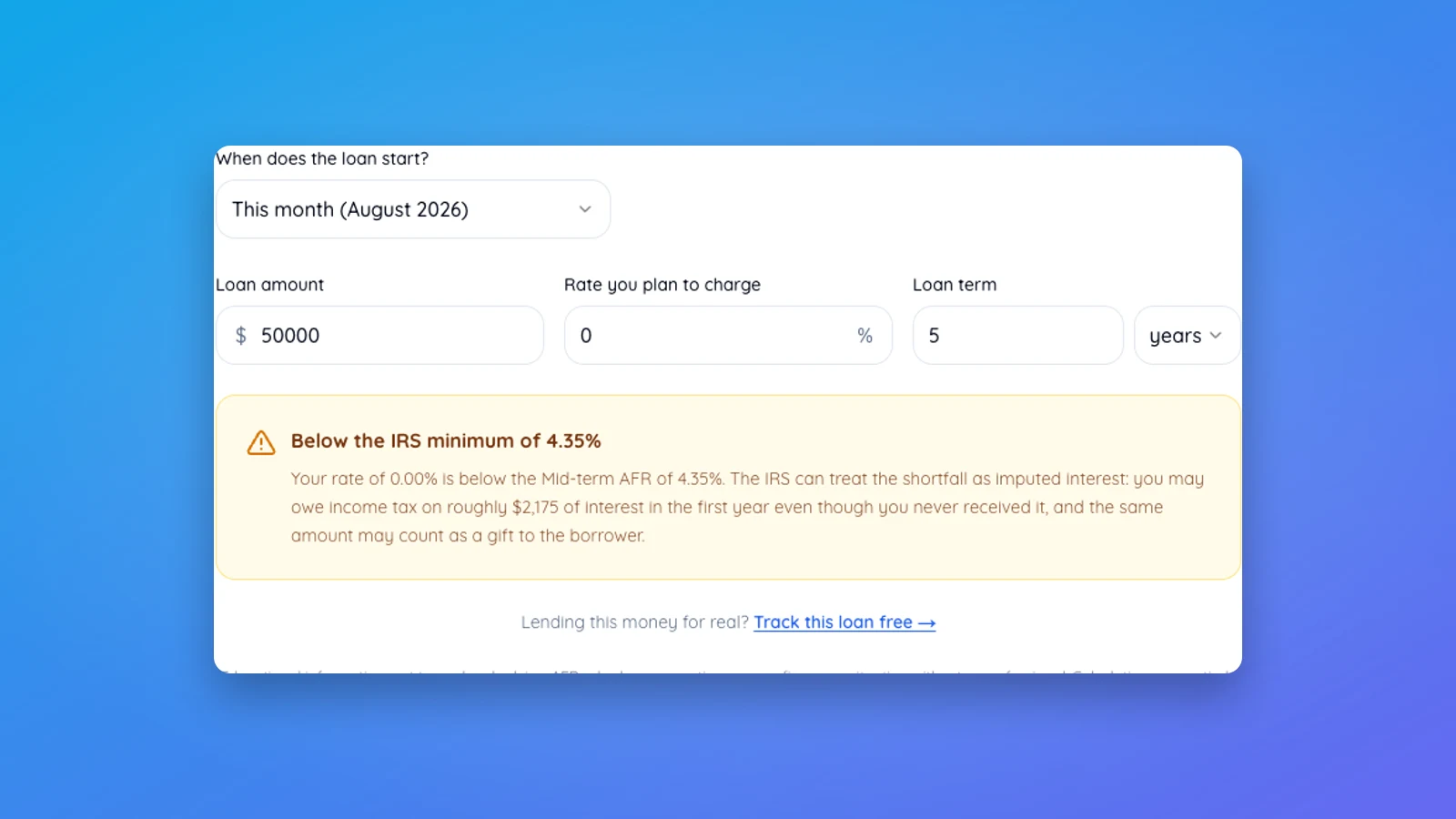
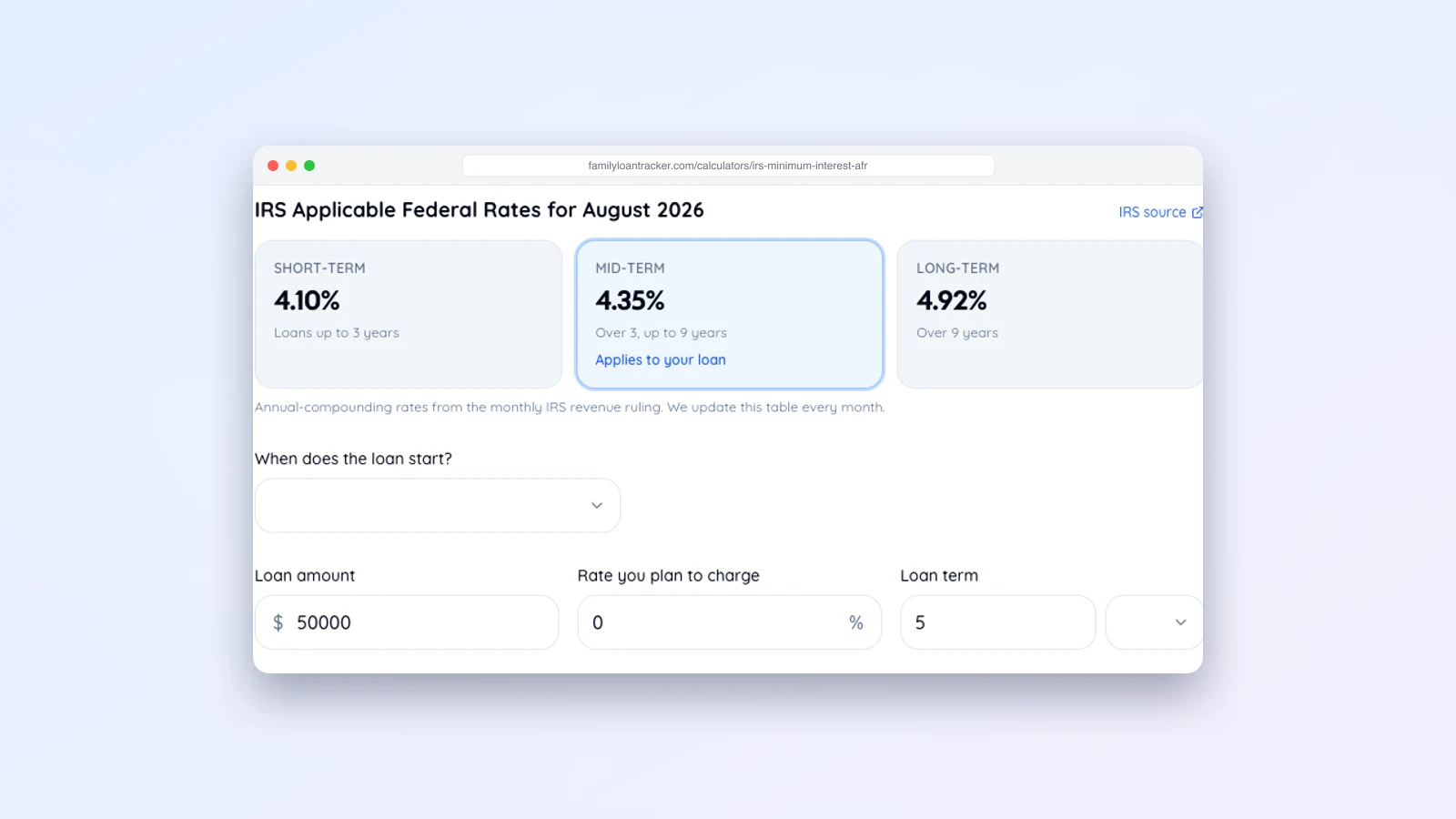
Imputed interest as a gift. When a family loan charges below the Applicable Federal Rate, the IRS treats the foregone interest as a gift from lender to borrower, on top of treating it as phantom income to the lender. That imputed amount counts against your annual exclusion to that borrower just like any other gift.
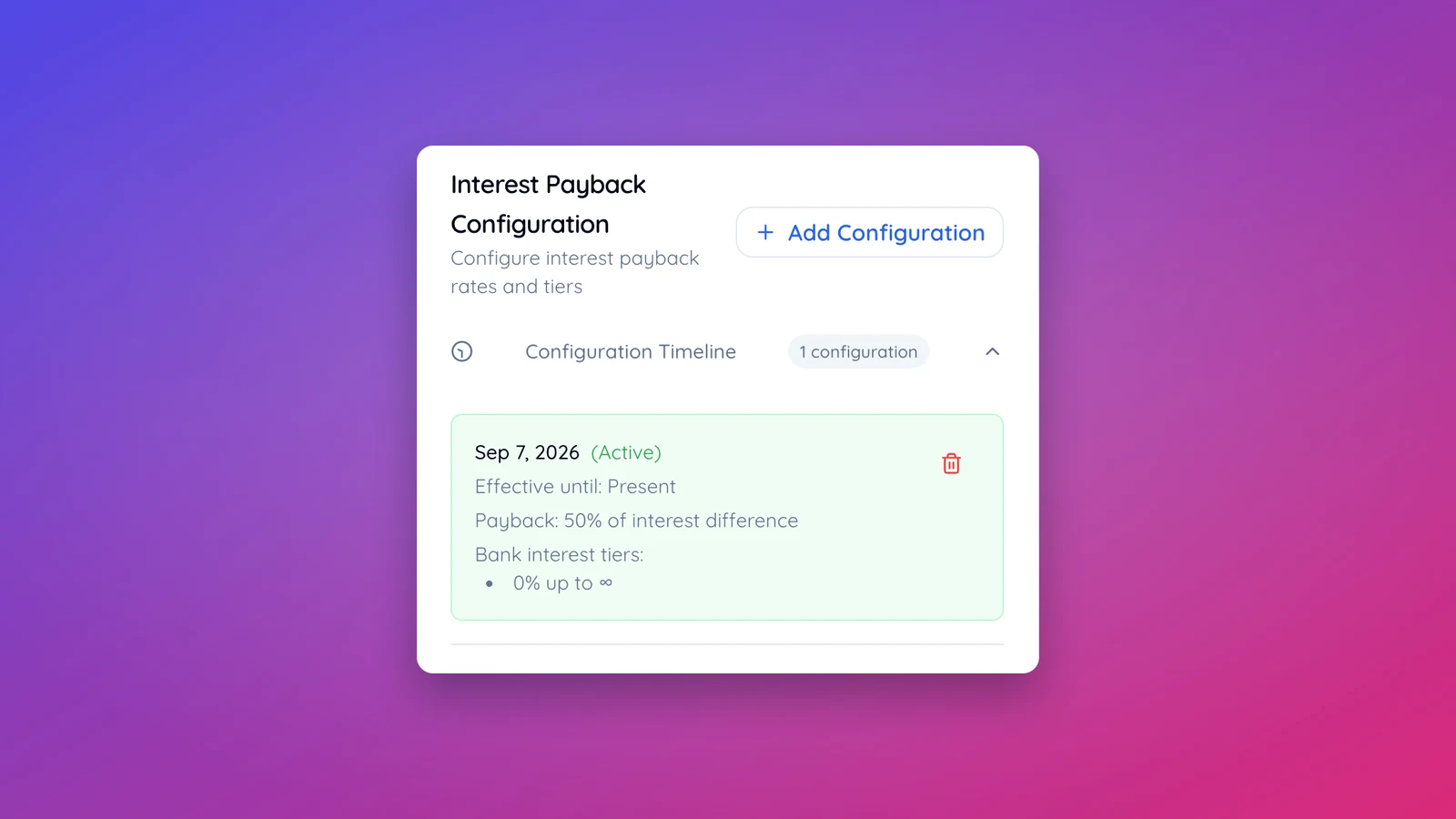
Interest gifting back. Some lenders charge a market or legally required interest rate, then gift part of it back to the borrower using the annual exclusion — a structure especially common where local law requires a minimum family-loan interest rate. The gifted-back amount has to stay within the exclusion to avoid filing Form 709.
A worked example
Say you lend your daughter $80,000 at 4% interest — above the AFR, so no imputed interest applies. That's $3,200 in interest due over the first year. If you decide to gift back $2,500 of that interest across the year to help her out, you're well under the $19,000 exclusion, so no gift tax return is needed for that gift.
Now say you also forgave $5,000 of the loan's principal that same year as an early-payoff gesture. Combined with the $2,500 interest gift, you've given her $7,500 total for the year — still comfortably under $19,000. If those two amounts together had exceeded $19,000, you'd need to file Form 709, even though you almost certainly still wouldn't owe any gift tax because of the much larger lifetime exemption.
Married couples and gift-splitting
A married couple can elect to "split" gifts on Form 709, treating a gift from one spouse as if half came from each. This effectively doubles the exclusion to $38,000 per recipient in 2026. If both parents want to gift or forgive a larger amount to one child without filing, splitting is the mechanism that allows it — but it requires both spouses to consent and file the election, even if neither owes tax.
When you have to file Form 709 (even if you owe nothing)
Form 709 is a reporting requirement, not necessarily a tax bill. You must file it for any year your gifts to one person exceed the annual exclusion, regardless of whether you've used up your lifetime exemption. The amount over the exclusion is simply subtracted from your $15,000,000 lifetime exemption (for 2026) rather than taxed immediately. Most family lenders who file Form 709 in a given year still owe $0 in actual gift tax — they're just tracking usage against the lifetime amount.
Failing to file when required doesn't usually trigger an audit on its own, but it does mean your lifetime exemption tracking is inaccurate on IRS records, which can complicate things at the estate level later.
How this differs from forgiving the entire loan
Gifting within the annual exclusion is different from forgiving an entire outstanding balance in one year. A single large forgiveness — say, wiping out a $40,000 remaining balance at once — exceeds the exclusion immediately and requires Form 709, counting against the lifetime exemption for the excess. Spreading forgiveness across multiple years, staying under $19,000 per person per year, avoids the filing requirement altogether. This is a common strategy, though it only works if the loan terms and payment history support that the debt was genuine before any forgiveness began — otherwise the IRS may treat the whole arrangement as a gift from day one.
Family Loan Tracker's interest gifting feature tracks cumulative gift-back amounts per payment period, making it straightforward to monitor how much of the annual exclusion you've used — and to pause gifting before you overshoot. We've also written a dedicated guide on how the tracker automates this for loans where a minimum interest rate is legally required and the lender wants to gift part of it back; that article is coming soon.
Keeping records straight
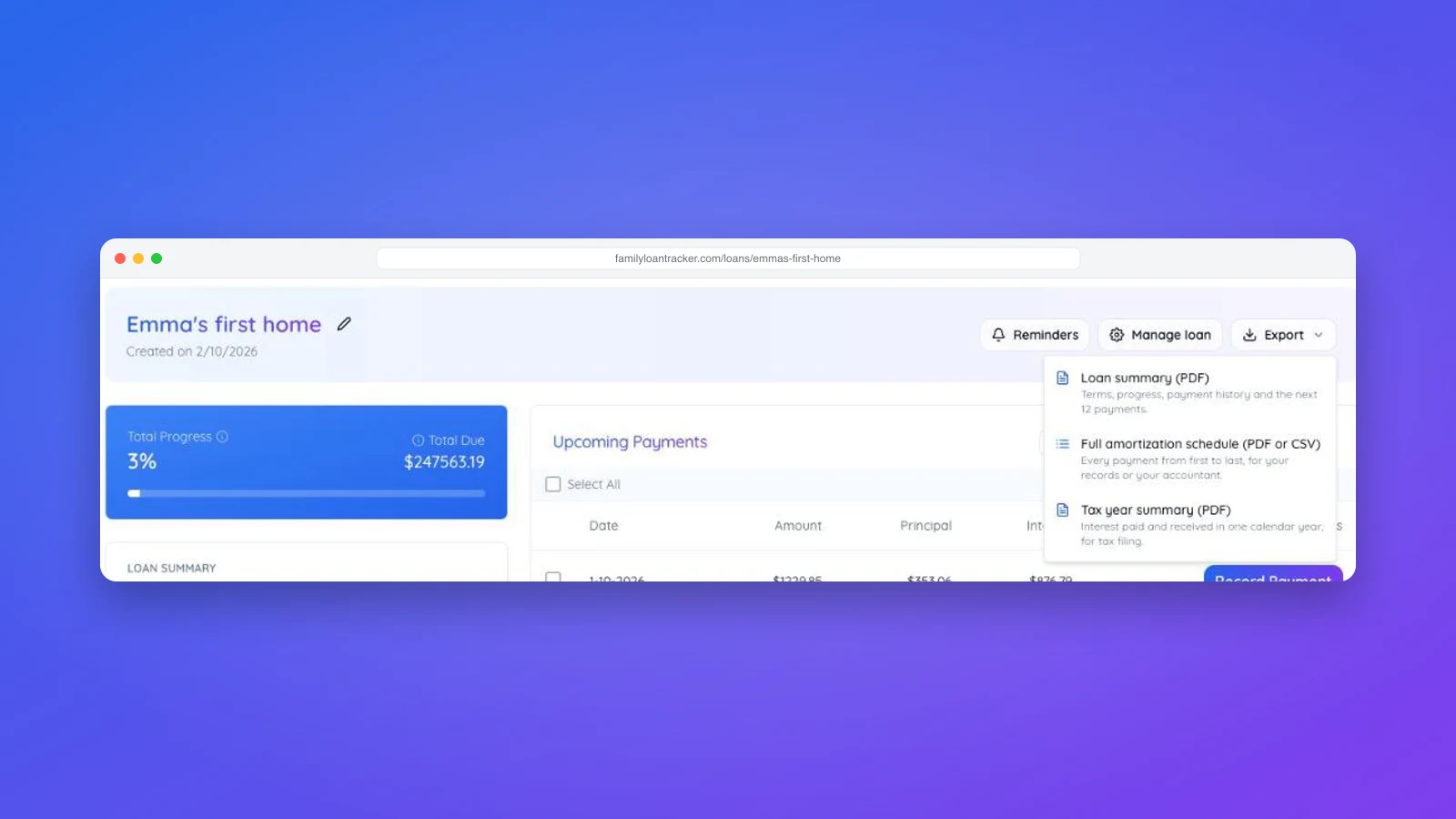
Whether you're forgiving principal, gifting back interest, or both, the cleanest approach is to track every gift to the same person across the year in one place, since the exclusion applies per recipient per year, not per transaction. A spreadsheet works, but a documented payment and gifting history — the kind a loan tracker produces automatically — is far easier to hand to a tax preparer when it's time to check whether Form 709 is needed. For the broader tax picture on family loans, our complete family loan tax guide covers AFR, imputed interest, and the gift tax exclusion together.